.png?width=147&height=34&name=POS-Nation-Logo-Main%20(1).png)




Grocery Store Inventory Management: A Complete Guide for 2026
Checkout is the last impression customers have of your grocery store — and any delays here can undo their positive shopping experience.
In fact, one in three shoppers report abandoning their shopping carts when lines are too long, causing you to lose sales and send customers to your quicker competitors.
But providing a fast, accurate checkout experience that rivals big-box supermarkets can be tough when you’re dealing with scale integrations, produce codes, EBT payments, age checks, and seasonal rushes.
In this blog, we’ll cover 12 strategies to tackle these challenges, speed up your grocery checkout line, and keep sales flowing.

1. Accept All Major Payment Types
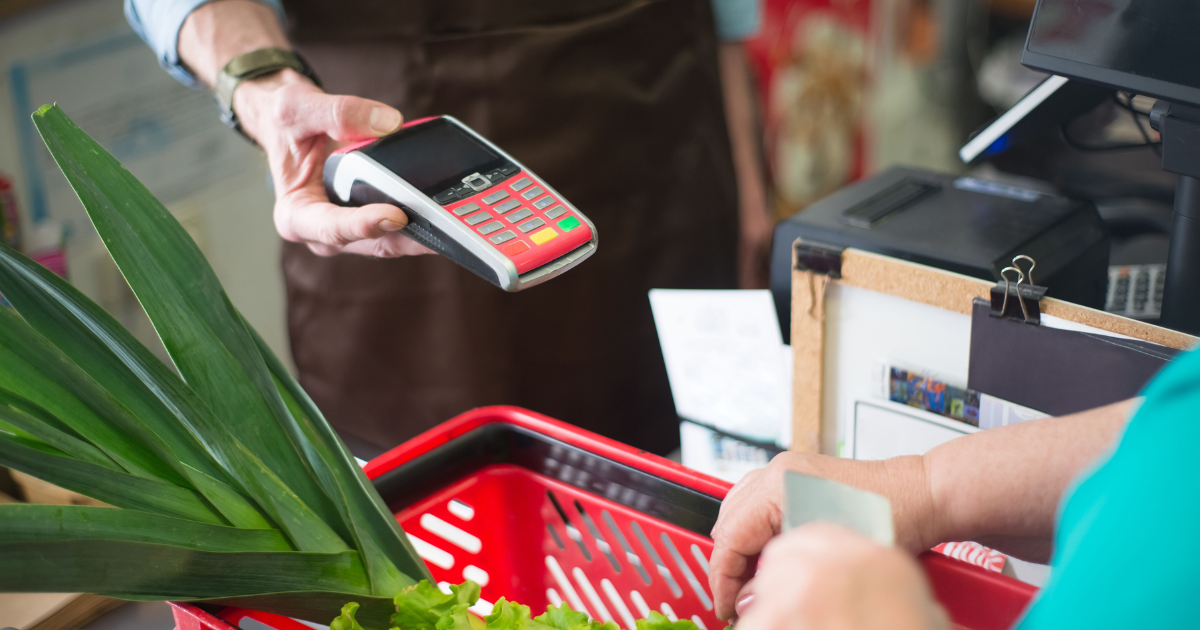
Offering multiple payment options at grocery checkout keeps lines moving and reduces potential bottlenecks from customers fumbling for the right card.
Let customers pay however is easiest for them — whether that’s cash, debit or credit, EBT, or mobile wallets like Apple Pay and Google Pay.
Contactless and tap-to-pay options move fastest, but you should still accept chip-and-PIN for customers who prefer it. Accepting EBT also expands your customer base and helps you build goodwill in the community.
Accepting all major payment types can save 30 to 60 seconds per transaction — letting one lane process dozens more customers during busy weekday evenings.
2. Integrate Payments With Your POS System
Accepting the right payment types only helps if those payments flow smoothly through your point of sale (POS) system.
If you’re still manually entering customers’ totals into the PIN pad, you’re leaving the door open to mistakes that slow you down, cost you money, and hurt customers’ trust in your business.
That’s why you need a grocery store POS system with fully integrated payment processing. Along with eliminating manual entry at the register, this ensures your sales and inventory records update in real time with each transaction.
With payments and inventory working together, you'll see fewer pricing errors, faster EBT transactions, and more accurate stock counts — all while freeing up cashiers to focus on customers instead of troubleshooting.
Related Read: Payment Processing & Grocery POS: How To Keep Your Rates Low
3. Try Email Receipts
Tired of printer jams and empty receipt paper rolls? Consider switching to e-receipts.
Here’s how to do it:
- Add a customer-facing display prompt. Collect contact information at checkout without slowing the line.
- Offer email and SMS options. Let customers choose their preferred format and reduce paper use.
- Customize receipts with coupons or loyalty offers. Turn a simple receipt into a marketing touchpoint that drives repeat visits.
- Connect receipts to your customer relationship management (CRM) or email platform. Sync purchase history with promotions to send targeted deals.
Along with speeding up grocery store checkout and keeping registers clutter-free, digital receipts give you purchase data tied directly to customer profiles. Over time, you can use this information to tailor your marketing campaigns and promotions to your most valuable shoppers.
4. Train Your Team
No amount of hardware or software will speed up checkout if your cashiers aren't confident using it.
Training should cover the basics — scanning, processing payments, bagging — as well as grocery-specific tasks like entering produce codes, weighing items accurately, and handling age-restricted sales for alcohol or tobacco.
Remember: Cashier training isn’t a one-and-done task! Schedule refresher training during high-volume seasons to keep skills sharp and checkouts moving quickly.
5. Invest in Easy-To-Use Scanners
Fast, reliable barcode scanners are a must-have for grocery store checkout.
Let’s look at a few main types of barcode scanners and what they’re used for:
- 3D scanners read barcodes at nearly any angle, so items don't need to be perfectly positioned for scanning.
- Tabletop and in-counter scanner scales combine scanning and weighing in one unit, so cashiers can price produce or bulk items without reaching for a separate scale.
- ID scanners speed up age verification for alcohol and tobacco purchases, so a compliance check doesn't slow things down.
If you’re still relying on a 2D scanner or manually ringing up items, consider investing in new scanners that integrate seamlessly with your grocery store POS system.
6. Set Up Hotkeys
Some grocery items don’t come with a barcode. Hotkey shortcuts let cashiers pull up these non-barcoded items like produce instantly instead of scrolling through a long PLU list.
Combined with product photos, hotkeys allow cashiers to ring up a cart full of fresh produce almost as fast as one who's memorized every code.
This small switch makes a huge difference, saving valuable time at the checkout counter and removing friction.
7. Upgrade Your Deli and Produce Scales
Meat, seafood, cheese, nuts, and other items sold by weight can be a speedbump in the checkout process. They’re also prone to pricing errors, which erode your profit margins over time.
Integrated deli and produce scales fix this at the source, letting customers or associates weigh an item, bag it, and print a barcode label right there.
These barcode labels identify the product SKU and calculate the price per pound, letting your cashier simply scan at the checkout counter instead of doing the math.
8. Add Self-Checkout Stations
Self-checkout can be a game-changer for busy grocery stores.
Adding a few self-checkout stations keeps busy customers satisfied, labor costs down, and transactions running smoothly during rush hour.
Self-checkout might seem complicated or expensive, but convertible hardware is convenient and affordable. With just a few clicks, you can convert a standard cashier-manned checkout counter to a self-checkout kiosk — and back again.
Don’t forget to keep an attendant nearby to help customers who get stuck and to reduce shrinkage from theft or error.
9. Schedule Staff Around Peak Hours
Understaffed lanes mean slow checkouts and frustrated customers — but overstaffing your grocery store eats into your bottom line.
That’s why you need to schedule staff strategically.
Use your POS system’s sales reports to identify peak times — typically early morning, lunch, after work, and weekends — rather than guessing.
You can also set up your POS system with clear cashier roles and permissions to limit overrides and voids to managers without slowing down lines.
10. Implement Scan-as-You-Shop
Looking to fully transform your grocery store checkout experience and compete with big-box giants like Sam’s Club? Consider experimenting with scan-as-you-shop technology.
Customers use mobile scan guns or their cell phone cameras to scan barcodes as they add items to their carts, then check out almost instantly by settling up at a kiosk instead of unloading a full cart onto a belt.
This is a bigger investment and can be more complex to manage, so make sure it’s the right fit for your store.
11. Create Express Lanes
Creating express lanes is a simple way to increase grocery store checkout speed during busy hours.
Customers with 10 items or less can use a dedicated register — ensuring that someone buying a gallon of milk doesn’t get stuck behind someone with a heaping shopping cart.
Keep in mind that this strategy only works if you enforce the item limit, so create clear signage and train your staff to direct shoppers to the right lanes.
Consider having customers bag their own purchases in express lanes. It speeds up the line further and reduces staff workload.
12. Let Customers Buy Online and Pick Up in Store
Some customers prefer to skip the grocery store checkout line entirely.
Offering options like buy online, pickup in store (BOPIS) helps you serve these shoppers while freeing up checkout lanes for others.
Customers browse your aisles online, add items to cart, and pay before heading to the store — all that’s left to do is hand off the order.
BOPIS simply requires an e-commerce platform like a website or Instacart storefront, but make sure it integrates with your grocery store POS system and payment processing solution to prevent snags and keep reporting accurate.
Related Read: 7 Online Grocery Delivery Challenges (and How To Overcome Them)
Where To Start: Deciding Which Grocery Store Checkout Strategies To Implement
Feeling overwhelmed? Don’t be! You don’t need to implement all of these grocery store checkout changes at once.
Choose one or two to begin with. If you’re wondering where to start, check your POS system data.
If you notice pricing errors, consider upgrading your scales and barcode scanners first. If you’re losing sales because you don’t accept EBT or Apple Pay, invest in new PIN pads. If you’re having trouble managing rush hours, add a few convertible cashier and self-checkout stations to your counters.
Whatever you prioritize first, track the same metrics before and after you make a change.
Get Started With Better Grocery Store Checkouts
Overhauling your grocery store checkout experience is a daunting task — but you don’t have to do it alone.
We’ll help you find the right grocery POS hardware, software, and payment processing configuration to help you shorten lines, boost customer satisfaction, and protect your bottom line.
Markt POS, our all-in-one grocery POS solution, includes fast and secure payment processing, flexible self-checkout options, real-time reporting, and more.
Talk with one of our grocery industry experts to see how Markt POS can help you transform your store’s checkout counter.


With 11 years of marketing expertise and a degree in marketing and analytics, Graham specializes in B2B SaaS growth strategies, bringing data-driven insights to retail technology solutions. He loves to write about all things point of sale, and wants to help small business owners succeed.