Considering Markt POS and Toast Retail for your grocery store? We can help.
Both platforms offer a modern, user friendly, cloud-based point of sale system, but they vary in pricing, industry focus, and support options.
Use this comparison to evaluate which platform best fits your operational needs and long-term goals.
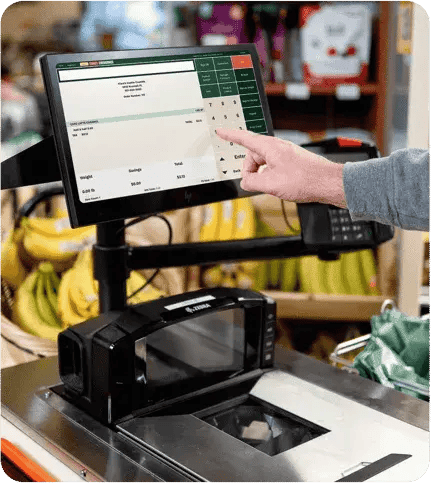
Let’s take a look at what makes Markt POS the top choice for grocers like you.


A well-equipped grocery checkout counter usually includes a touchscreen PC, self-checkout, a scaling system, a receipt printer, a handheld barcode scanner, a cash drawer, and a payment device.
POS software providers generally use a tiered pricing structure with basic features included in the lowest cost option and more advanced features included in the higher cost option.
Credit card processing fees can be a major line item in your business’ expenses, so choosing a plan that fits your budget is crucial.
A stress-free setup and onboarding process is essential for getting your new POS up and running with minimal snags.
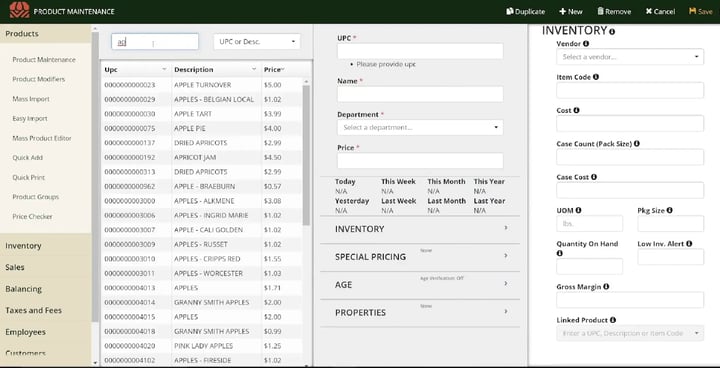
Importing your existing inventory to a new system is one of the most crucial (and often one of the hardest) parts of migrating to a new system.
A trustworthy support team can help you make the most of your POS system and resolve issues whenever they arise.
Software either runs on-premises (installed on a local computer) or in the cloud. Cloud-based systems let you manage and monitor your store from anywhere, at any time.
Choosing a POS system with built-in purchase order creation and vendor management reduces time spent on manual invoicing, reduces costs, and ensures your store is well stocked.
Age verification tools ensure that you stay compliant with state and local liquor laws.
Built-in customer loyalty and promotion features can help you attract new customers and keep existing customers coming back for more.
In the world of running a grocery store or specialty store, knowledge is power, and that’s where your POS system’s sales reports come in.
An Open API in POS software lets businesses easily connect third-party tools like e-commerce, accounting, or custom apps. Unlike a closed API, it gives customers more flexibility and control, helping them build a solution that fits their unique needs without being locked into one vendor.
E-commerce helps expand your customer base and boost sales, but to sell online, you need a POS system with e-commerce integration to handle payments and keep your inventory updated.
Subscription sales allow customers to sign up for recurring orders like weekly produce boxes or meal plans billed automatically. The system handles payments, tracks subscriptions, and organizes fulfillment, making it easy to offer convenience and improve customer retention.
QSR (Quick Service Restaurant) features in grocery store POS systems are helpful for departments like delis, bakeries, or prepared foods. They support quick order entry, item customization (like sandwich or salad modifiers), kitchen printing, and combo pricing, making it easier to handle made-to-order items efficiently while keeping service fast and accurate.
A well-equipped grocery checkout counter usually includes a touchscreen PC, self-checkout, a scaling system, a receipt printer, a handheld barcode scanner, a cash drawer, and a payment device.
POS software providers generally use a tiered pricing structure with basic features included in the lowest cost option and more advanced features included in the higher cost option.
Credit card processing fees can be a major line item in your business’ expenses, so choosing a plan that fits your budget is crucial.
A stress-free setup and onboarding process is essential for getting your new POS up and running with minimal snags.
Importing your existing inventory to a new system is one of the most crucial (and often one of the hardest) parts of migrating to a new system.
A trustworthy support team can help you make the most of your POS system and resolve issues whenever they arise.
Software either runs on-premises (installed on a local computer) or in the cloud. Cloud-based systems let you manage and monitor your store from anywhere, at any time.
Choosing a POS system with built-in purchase order creation and vendor management reduces time spent on manual invoicing, reduces costs, and ensures your store is well stocked.
Age verification tools ensure that you stay compliant with state and local liquor laws.
Built-in customer loyalty and promotion features can help you attract new customers and keep existing customers coming back for more.
In the world of running a grocery store or specialty store, knowledge is power, and that’s where your POS system’s sales reports come in.
An Open API in POS software lets businesses easily connect third-party tools like e-commerce, accounting, or custom apps. Unlike a closed API, it gives customers more flexibility and control, helping them build a solution that fits their unique needs without being locked into one vendor.
E-commerce helps expand your customer base and boost sales, but to sell online, you need a POS system with e-commerce integration to handle payments and keep your inventory updated.
Subscription sales allow customers to sign up for recurring orders like weekly produce boxes or meal plans billed automatically. The system handles payments, tracks subscriptions, and organizes fulfillment, making it easy to offer convenience and improve customer retention.
QSR (Quick Service Restaurant) features in grocery store POS systems are helpful for departments like delis, bakeries, or prepared foods. They support quick order entry, item customization (like sandwich or salad modifiers), kitchen printing, and combo pricing, making it easier to handle made-to-order items efficiently while keeping service fast and accurate.
.png?width=147&height=34&name=POS-Nation-Logo-Main%20(1).png)

