





Holiday Scheduling: 7 Steps to Perfect Staffing and Happy Employees
Merchandise planning is how businesses anticipate demand and effectively allocate resources to make the right products available at the right time.
Put simply, merchandise planning is at the heart of making your business a one-stop shop for your customers.
Retail merchandise planning typically includes:
- Demand forecasting
- Seasonal planning
- Inventory level optimization
- Vendor management
- Pricing strategy
- Store layout
Sure, large corporations and big chains have their advantages in merchandise planning, like dedicated marketing and research teams. But don’t worry — small businesses have plenty of tools to help them keep up.
In this article, we’ll cover the most important aspects of merchandise planning for small businesses, including:
- Examples of merchandise planning in retail
- Why effective merchandise planning is important for your store’s success
- The five basic components of merchandise planning
- Common merchandising challenges and how to overcome them
Let’s dive in.
Examples of Merchandise Planning in Retail
It’s one thing to talk about merchandise planning in the abstract. It’s another to see it in action. Here are some examples of how different small businesses approach merchandise planning.
Why Is Merchandise Planning in Retail Important?
The goal of merchandise planning is to have the right amount of stock at the right time, place, and price.
Merchandise planning offers a few distinct advantages for small retailers:
- Drives higher sales: Dialing in a great product selection and pricing strategy helps attract customers to your store and keep profits high.
- Boosts customer retention: When you consistently have the products customers are looking for, they’re more likely to choose your store in the future.
- Reduces costs: Strategically planning what and how much you sell ensures you don’t overstock on items you don’t need, reducing your costs.
- Improves marketing ROI: Instead of trying random sales and ads, then seeing what sticks, know which products are coming in and plan your marketing strategy accordingly.
Perfection shouldn’t be your goal — even a basic merchandise planning strategy will pay off in the long run.
The 5 Components of Retail Merchandise Planning
There are five primary components of merchandise planning.
This concept is also referred to as the “five rights” of merchandise planning (right product, right place, right time, right quantity, right price).
Merchandise planning might seem intimidating, but doing it well doesn’t require an advanced degree or software. At its core, merchandise planning is simply taking a more thoughtful and strategic approach to what you sell, how much you sell, and where you sell it.
5 Common Merchandise Planning Challenges (and How To Solve Them)
Many businesses know the importance of meeting demand, but struggle to make changes. Here are five common merchandise planning challenges and how to overcome them.
Challenge #1: Lack of Visibility
A smart pricing strategy, an understanding of seasonal trends, identifying bestsellers, and demand forecasting are all at the heart of effective merchandise planning. Unfortunately, these metrics are nearly impossible to track without a comprehensive view of your store inventory and financial performance.
A lack of visibility prevents most small businesses from improving their merchandise planning strategy, perhaps more than any other item on this list.
For most, this isn’t their fault. Instead, manual processes and disconnected systems prevent them from gaining a holistic view of their business operations.
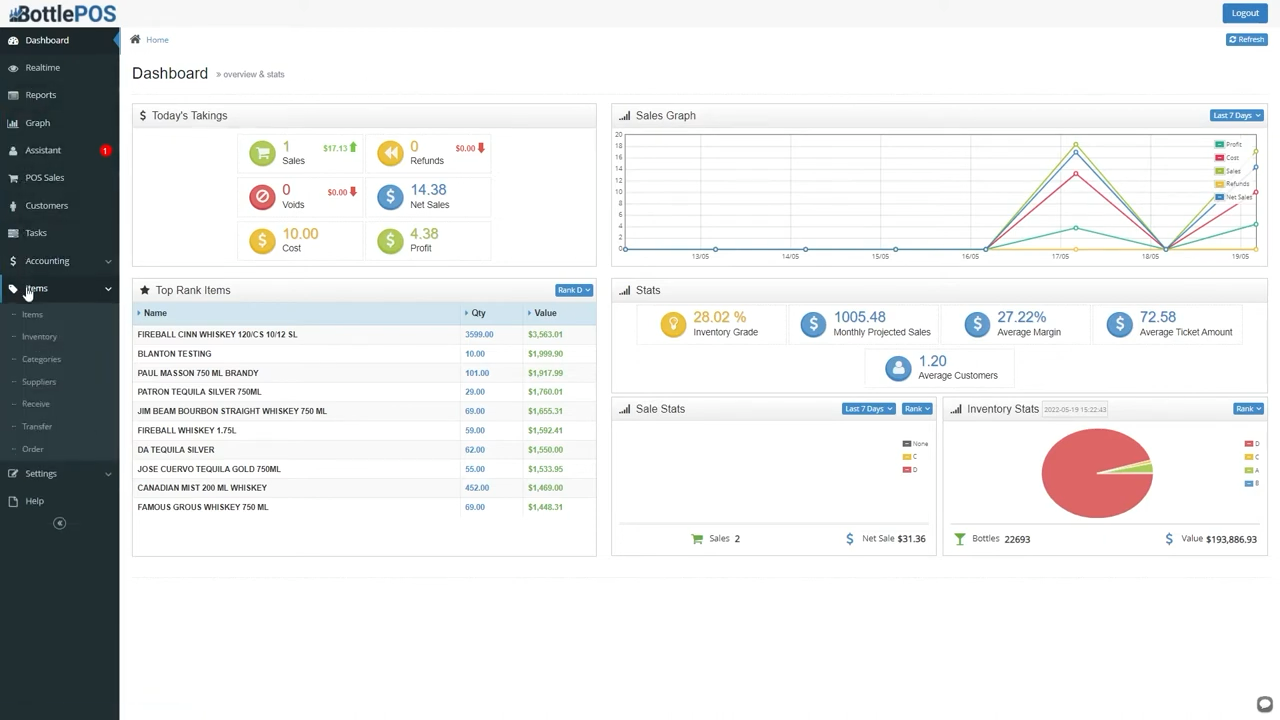
An example of a sales dashboard on liquor POS system Bottle POS
Challenge #2: Not Understanding Your Niche
Simply having visibility into your store’s performance isn’t enough to become a merchandise planning master.
As a small business, you have a lot of competition. People don’t come to you because you offer more than a big chain store; they come to you because you have something unique — whether that’s the products themselves, the atmosphere, or your expertise.
Understanding your value comes largely from intuition and passion. What made you want to get into this business, and how do you convey that passion to your customers?
If you don’t focus on the products and services that make you stand out, you might fade into the background.
Related Read: The Ultimate Business Plan for Retail Business Management

Challenge #3: Not Having Defined Goals
Every retailer wants to be successful, but what does “being successful” really mean? Setting clear and quantifiable goals is essential for effective merchandise planning.
That’s easier said than done when you can’t see what’s really going on. And you’d be surprised by how your feelings about store performance don’t always match up with reality.
Challenge #4: Being Reactive Instead of Proactive
We’ve all been there, in the eye of the storm — those chaotic moments when an unexpected surge in demand takes us completely off guard.
Suddenly, customers complain that items are out of stock. You try to order them, but by the time they arrive, it’s too late — they’ve gone somewhere else. The cycle repeats, and by the end of it, you’re left with a lot of dead stock and annoyed customers.
In these situations, your only choice is to slap together a quick sale to move your overstocked merchandise and hope for the best.
Unfortunately, a reactive approach to demand can increase overhead and lose customers.
This is especially true for small businesses. If a big chain runs out of an item, people will still come back. If they take a chance on a small business only to find an item is out of stock, they might not.
Challenge #5: Not Updating Your Store Layout
Many store owners instinctively lay out their store in a way that makes sense to them — and that’s not a bad way to start.
However, it’s important to change things up as you get to know your customers and their preferences. When customers can’t quickly find what they’re looking for, they might go elsewhere.
Businesses that don’t focus on visual merchandising can easily see sales drop, even if they have a great product list and the expertise to back it up.
Make Better Retail Merchandise Planning Decisions With an Industry-Specific POS System
Merchandise planning isn’t just reserved for corporations. With the right tools, you can easily craft an effective retail merchandising strategy.
Just like you wouldn’t use a hammer to fix your phone or a saw to fix your car, though, your merchandising plan and business need a system tailored to your specific industry.
At POS Nation, we work directly with small businesses across industries to find the software and hardware that are the best fit for their needs. With solutions tailored for boutiques, grocers, liquor store owners, electronics repair, and more, we match retailers with industry-specific and cost-effective solutions for any style of business.
Schedule a demo today to see how a solution tailored to your industry can help you anticipate demand and crush the competition.

With 12 years in the POS industry, Cort's journey as President of POS Nation parallels the transformation from legacy systems to cloud-based solutions. During this evolution, he recognized that inventory management remained a persistent challenge for store owners. His strategic decision to specialize in key industries has set POS Nation apart from broader market players. By developing deep expertise in specific retail sectors, his team delivers more targeted, effective solutions than one-size-fits-all alternatives. This focused approach has established POS Nation as an industry expert, helping store owners solve their most pressing operational challenges through specialized point of sale solutions.