The Complete Guide to Grocery Store Marketing
By Gina Obert
.webp?width=690&height=362&name=Marketing%20Guide%20Hero%20Image%20(1).webp)
Introduction
Is marketing really that important to your grocery store’s success? Let’s take a quick journey to the kitchen to explain.
After painstakingly measuring ingredients, double-checking that the oven is set to the right temperature, and making a complete mess of your kitchen, you feel confident that you followed the chocolate cake recipe perfectly.
After hearing the exciting beep of your timer, you grab your oven mitts and pull the cake out — only to realize that your promising batter has flattened and sunk to the bottom of the pan.
What’s the lesson here? One missing ingredient (in this case, baking soda) can bring your success to a standstill.
This valuable lesson isn’t just about baking; it’s also true for running a profitable grocery store.
Even if you’ve perfected your aisle layout, stocked your shelves with the highest-quality products, and trained your employees to offer the friendliest customer service in the neighborhood, you won’t have any luck without a must-have element: the right grocery store marketing strategy.
In this comprehensive guide, we’ll share everything you need to know about grocery store marketing, including how to attract new customers, nurture customer loyalty, and boost your sales. Whether you’re starting your small business journey or you’ve been open for years, we hope this guide will inspire you to set and achieve new grocery store goals.
.webp?width=750&height=400&name=AdobeStock_97077095-edit%20(1).webp)
Why Grocery Store Marketing Is an Essential Ingredient for Success
As an independent grocery store owner, you’re facing tough competition. With big-box giants like Kroger and Walmart looming just around the corner, getting customers into your store and through the checkout line can seem nearly impossible.
But the right grocery store marketing strategy can set your business apart, help you nurture a dedicated customer base, and spark significant growth in your sales.
Before we dive into specific strategies, let’s take a look at the three major goals to keep in mind. Your grocery store marketing plan should:
- Attract new customers: You want to expand your reach and bring new shoppers through your door.
- Generate repeat business: Give customers a reason to choose your business every time they need to restock their refrigerators and pantries.
- Increase the value of your average sale: Encourage customers to spend more during each shopping trip.
To accomplish these goals, you need the right techniques and tools, including everything from a thorough analysis of your target market to a point of sale (POS) system with sales-boosting features.
In the next sections, we’ll share all you need to know to craft a winning marketing strategy for your grocery store. Here’s a quick peek at what’s ahead:
- Identifying your ideal customer and designing your marketing plan around them
- Finding ways to stand out from the competition
- Using in-store and digital strategies to win over customers
- Building a marketing strategy on a budget
- Future-proofing your marketing approach for continued success
Market Research: Understanding Who You’re Marketing To
Who is your ideal customer? What do they want? Why should they choose your grocery store?
Market research is how you discover the answers to these questions, and it’s a challenging but vital part of developing a supermarket marketing strategy. Let’s take a closer look at what goes into thorough grocery store market research.
Identify Your Target Market
The first step of market research involves learning about your neighbors. Here are some factors to investigate as you analyze your area’s demographic data:
- Age: Does your grocery store serve college students, young families with small children, or retirees?
- Income: Are your shoppers big spenders or on a budget?
- Ethnicity: Are your shoppers from diverse cultural backgrounds, or are they more homogenous?
Beyond these basic demographic categories, you can use resources like the U.S. Census Bureau to learn about your neighborhood’s average education level, computer access, and even transportation habits.
With this information, you can create a profile of the average grocery shopper in your neighborhood. This profile should inform every aspect of your marketing approach, including which products to stock and how to promote them.
Size Up the Competition
Understanding your competition is just as critical as understanding your customers. An in-depth competitor analysis will help you identify promising opportunities to stand out from other grocery stores in your area and capitalize on what makes your business unique.
To conduct a competitor analysis, visit other grocery stores and markets in your area and take notes on their product selection, price ranges, and the quality of their customer service. Don’t forget to check out each business’ online presence and digital marketing approach.
After your investigation, you should know what your competitors do well, where they fall short, and, most importantly, the gap your grocery store can fill.
Develop Your Value Proposition
Once you’ve identified your ideal customer and pinpointed what makes your grocery store stand out, you can develop your value proposition.
Let’s look at an example of how researching your target market and competition can reveal your value proposition:
- You live in a neighborhood with two distinct populations: wealthy retirees who have settled in longstanding neighborhoods, and college students living in the local university’s dorms and nearby apartment complexes.
- Census data confirms your observations, revealing a large gap between older, affluent residents and younger residents with limited disposable income.
- During your competitor analysis, you visited several specialty markets offering artisan cheese, farm-fresh meats, and organic produce — all at sky-high prices.
Using this research, you can develop your value proposition: "Our grocery store will cater to college students on a budget and offer the most affordable groceries in the neighborhood."
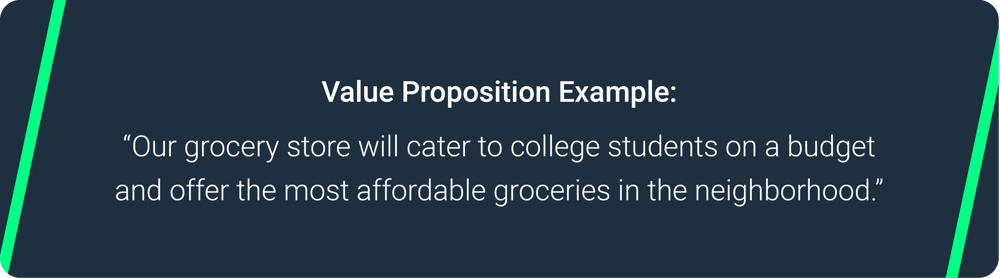
Taking the time to develop a strong value proposition like this one takes the guesswork out of grocery store marketing and helps you understand exactly who you’re talking to and what you offer.
Build Out Your Brand
A successful grocery store is more than a collection of shelves and a selection of products. It needs a distinct, compelling brand identity that aligns with your value proposition, resonates with your customers, and shapes the in-store experience.
Here are some key elements that showcase your store’s brand identity:
- Your store’s logo and signage
- Your decor and design elements
- Your team’s customer service training
- Your product selection
- Your marketing “voice” and messaging
Let’s say your value proposition is that you cater to environmentally-conscious shoppers and offer planet-friendly grocery options.
To craft a brand identity that matches your value proposition, you might opt for earthy tones like green and brown in your decor, use a handwriting-style font for your signage, and emphasize your focus on sustainability in your marketing messages.
Consistency is key. Your value proposition and brand identity should inform every aspect of your grocery store’s operations and marketing efforts — helping your customers understand exactly who you are, what you have to offer, and why they should choose you.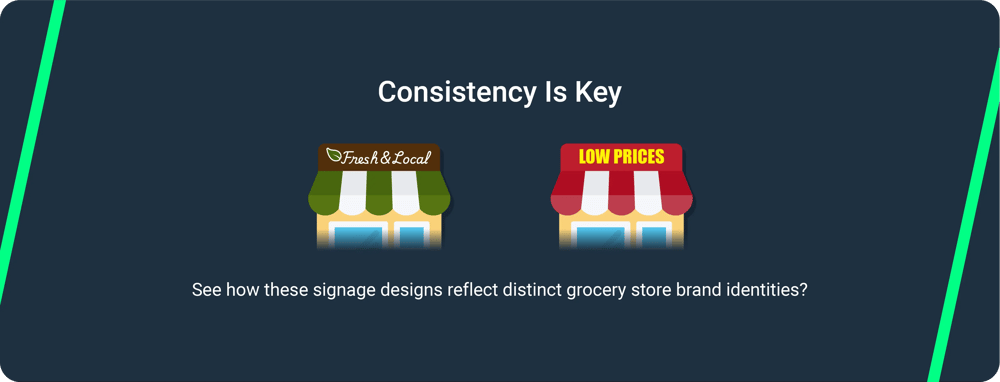
In-Store Grocery Marketing
Digital Marketing for Grocery Stores
Content Marketing for Grocery Stores
Mobile Marketing Strategies
Grocery Store Marketing on a Budget
Thinking Ahead: How To Have Lasting Marketing Success
Think of grocery store marketing techniques like promotions, email campaigns, and social media posts as experiments. They’re short-term, and after they’re over, you can check your sales reports to evaluate how well they worked and what you should do differently next time.
These marketing experiments should make up a significant portion of your efforts, but you also need ongoing strategies that work year-round.
The Value of a Customer Loyalty Program
One of the most effective and lowest-effort ways to keep customers coming back long-term is to launch a customer loyalty program. A loyalty program gives customers a reason to choose your store for all their grocery needs, letting them save more when they spend more.
Your loyalty program’s structure should reflect your marketing goals and customers’ habits and preferences. Here are a few options:
- A points-based program lets shoppers earn points every time they shop with you. The more they spend, the more points they’ll accumulate. Eventually, they can redeem these points for a discount.
- A discount club gives members access to exclusive promotions. You might offer discounts on rotating categories or specific products to entice shoppers to sign up for your program.
- Tiered membership loyalty programs give customers a sense of urgency and competition. The more they shop with you, the better their chances of unlocking a new “level” of perks.
The easiest way to set up and manage a customer loyalty program is through your POS system. Choose one that includes a fully customizable loyalty program plus customer relationship management (CRM) features.
With a CRM system, you can collect and store customers’ contact information, get insights from your most valuable shoppers’ purchase history, and even send personalized offers to keep them coming back.
Why a Seasonal Marketing Approach Matters
A seasonal marketing approach is another way to keep your aisles and shopping carts full all year long.
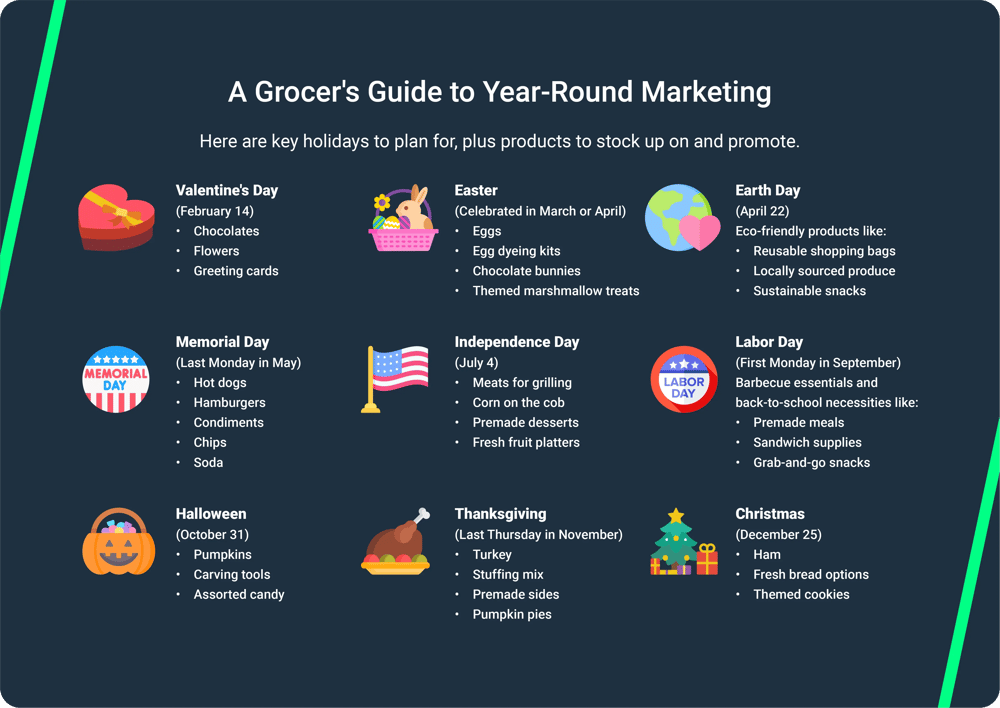
In the summer, your customers will fill their carts with refreshing fruits, cookout supplies, and frozen delights like ice cream and popsicles. In the fall, they’ll be on the hunt for pumpkin-flavored goodies to welcome cooler weather. Around the winter holidays, they’ll stock up on hosting necessities like whole hams and turkeys, comfort food sides, and peppermint treats.
Beyond stocking on-theme products, get creative with your marketing techniques and displays to embrace each passing season.
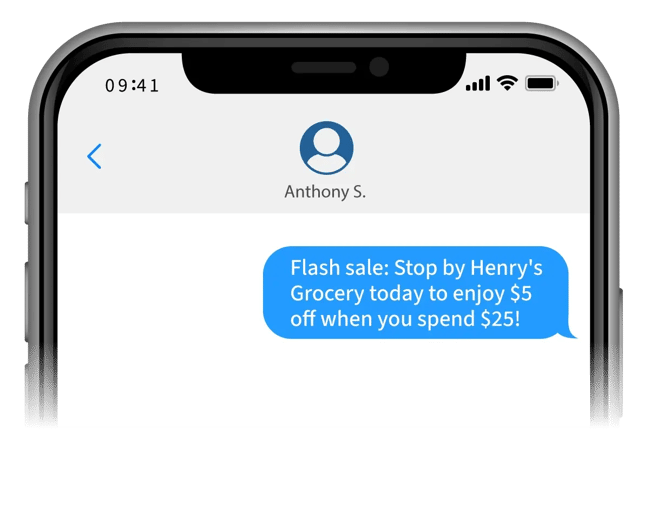
For example, during the holiday season, you can offer bundle deals on feasting essentials, design festive endcaps featuring stocking-worthy treats, and use a cheery tone in your signage, SMS messages, and email newsletters.
Pro tip:
Your POS system is a goldmine of information about your store’s seasonal performance. Dig into your historical sales reports to learn how your customers’ product demand and behaviors align with seasonal shifts and major holidays.
What Does Success Look Like?
Throughout this guide, we’ve shared tips for achieving marketing success. But how can you measure that success? While seeing new faces and full carts is certainly a positive, there are other metrics to track.
How To Measure Marketing Success
First, let’s talk about developing and tracking key performance indicators, or KPIs. You should check these metrics before and after launching a new marketing campaign. Here are some examples:
- Sales revenue: This is your store’s overall revenue during a certain time period. You should be able to see your revenue broken down by the year, month, week, day, or even hour.
- Average transaction value (ATV): This is how much your customers spend on average each time they shop with you.
- Basket size: This is the number of items customers purchase on average during their shopping trip.
- Foot traffic: This is the number of customers who walk through your store’s doors. You can measure your foot traffic manually using a clicker counter, reviewing your security camera footage, or investing in foot traffic analysis technology.
- Conversion rate: This is the percentage of store visitors who made a purchase. Your goal is for every visitor to become a customer.
For each of your marketing campaigns, choose a few KPIs to track. If you offer a BOGO deal, you can expect your average basket size to increase. If you’ve expanded your digital marketing efforts, look for an uptick in foot traffic.
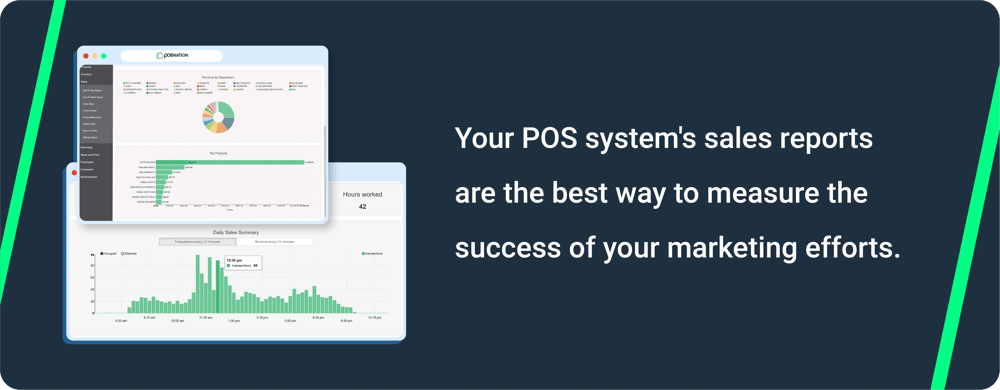
Your grocery store’s POS system is your home base for most of these metrics. You should be able to compare your historical data to your post-promotion data, measuring the success of your efforts, identifying areas for improvement, and making a plan for the future.
How To Leverage Grocery Industry Trends
Long-term grocery marketing success requires you to stay flexible and on-trend. Keep an eye on industry publications, recipe blogs, and social media to learn what your customers might look for when they stop by your store.
Here are some relevant grocery store advertising ideas to inspire you:
- Sustainability: Customers are becoming more concerned about the impact of their purchasing decisions, and some are even willing to pay more for sustainably and ethically produced products. Design signage and offer promotions to highlight your planet-friendly options.
- Wellness: Customers are on the hunt for groceries that align with their health goals. To make the most of this trend, you can launch a New Year’s resolution-themed marketing campaign in January featuring your healthiest products, add healthy recipe ideas to your website and social media pages, and make healthy grocery swap recommendations in your email newsletter.
- Local focus: Customers love the opportunity to try artisanal products they can’t find anywhere else. Offer taste tests to highlight your selection of local snacks, meats, or produce.
- E-commerce: Customers are busier than ever — which is why e-commerce options like grocery pickup and delivery continue to grow in popularity.
Don’t forget to check your sales reports to discover emerging trends! This data should give you insights into your customers’ unique and changing interests, helping you design promotions and offer products that align with their wants and needs.
Achieve Grocery Store Marketing Success With POS Nation
That’s everything you need to know about attracting new customers, increasing customer retention, and boosting your average sale value. Let’s recap our main takeaways:
- Get to know your customers and competition, then identify what makes your grocery store special.
- Experiment with different marketing strategies, like offering in-store promotions, establishing your online presence, and launching an online grocery store.
- Invest in long-term marketing efforts like a customer loyalty program and seasonal campaigns.
- Measure the success of your marketing efforts using your POS system’s sales reports.
- Stay up to date on grocery industry trends, and get creative with your marketing.
Ready to get to work? Your first step is to invest in the right POS system.
Your store’s POS system is your most valuable asset when it comes to marketing.
POS Nation makes it a breeze to set up promotions, launch a customer loyalty program, offer convenient e-commerce options, manage your shoppers’ contact information and purchase history, and measure the success of your marketing efforts over time.
Plus, our software will prepare you to handle more customers and higher sales volumes, ensuring short checkout lines and well-stocked shelves.
See POS Nation’s marketing features and more in action by scheduling your live demo with one of our grocery industry experts today!
